Global Flavors: How the Menu Adapts Across 100+ Countries
While the “Golden Arches” are a universal symbol, what you find under them is anything but uniform. Operating in over 100 countries, the brand has mastered the art of “glocalization”—the practice of conducting business according to both local and global considerations. To stay relevant, the menu undergoes drastic transformations to align with regional palates, religious dietary laws, and local traditions.
The Art of the Regional Swap
The core strategy involves taking a familiar format (the burger or the wrap) and infusing it with local soul. This isn’t just about adding a new sauce; it’s about a total culinary pivot.
-
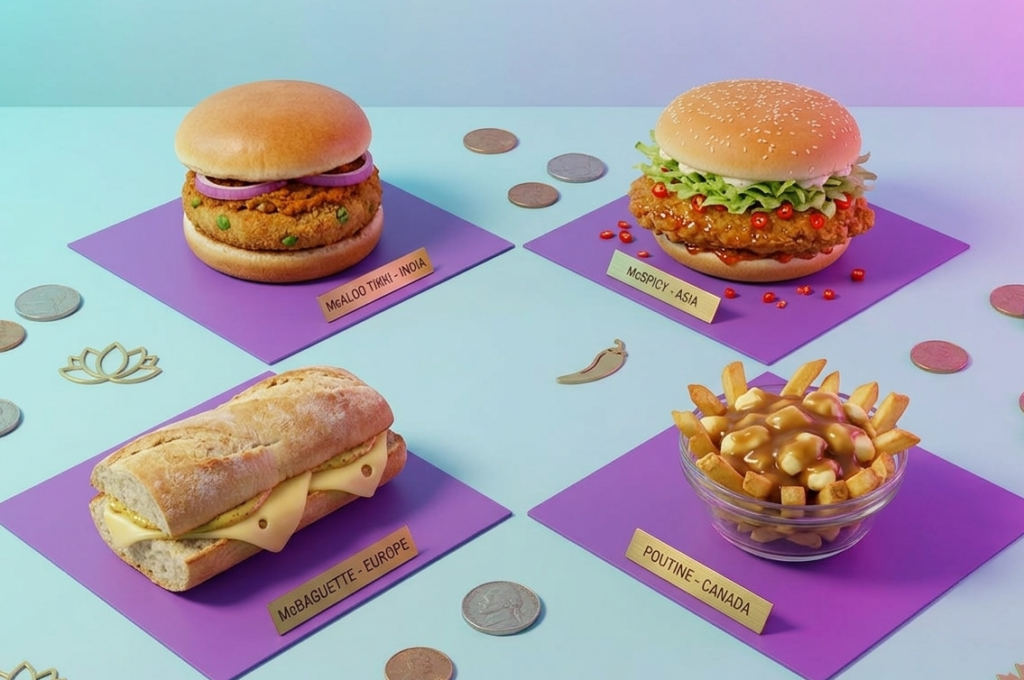
India’s Beef-Free Innovation: In a market where beef is culturally and religiously restricted, the McAloo Tikki is a superstar. It features a breaded potato and pea patty seasoned with traditional spices, proving that a “burger” doesn’t actually need meat to be a best-seller.
-
The Heat of Asia: The McSpicy chicken burger is a staple across many Asian markets, catering to a much higher tolerance for heat than you’d find on a standard North American menu.
-
European Sophistication: In France, you might find the McBaguette, featuring Emmental cheese and Dijon mustard, while in Germany, the Nürnburger has been known to feature three authentic bratwursts on a single roll.
-
The Northern Touch: Right here in Canada, the addition of Poutine—rich gravy and squeaky cheese curds over classic fries—is a mandatory nod to Québécois culture that has become a national favorite.
Why It Works
This cultural flexibility is one of the most profitable engines in fast-food history. By respecting local tastes—like serving Teriyaki Burgers in Japan or McPinto (rice and beans) in Costa Rica—the brand ceases to be a foreign invader and becomes a local fixture.
Whether it’s a shrimp burger in Seoul or a halloumi wrap in Kuwait, these menu variations turn a global giant into a neighborhood spot, one unique ingredient at a time.